


I find that sewing is a great way to engage and “calm” the students when they become a bit rambunctious. Working with easy to sew textiles like open weave fabrics such as hessian/burlap, old sweaters, bits and pieces found in the classroom or brought from home is ideal.
This project is very economical and offers lots of possibilities, students can create hens and owls and any other animals or characters they would like to invent. They will experiment by creating patterns cut out from newspaper sheets.
Primary/elementary students will be able to draw and cut simple shapes to be used as patterns.
Print the list of recyclable materials, tick the materials you need and send it home with the students for parents to contribute.

Needles: depending on the age group, needles can be plastic or made of aluminium with blunt points, for the very young. For older students the best needles to use, in our experience, are the Chenille needles # 18, they are relatively big and sharp enough to sew through fabrics like felt and fake fur, for example.
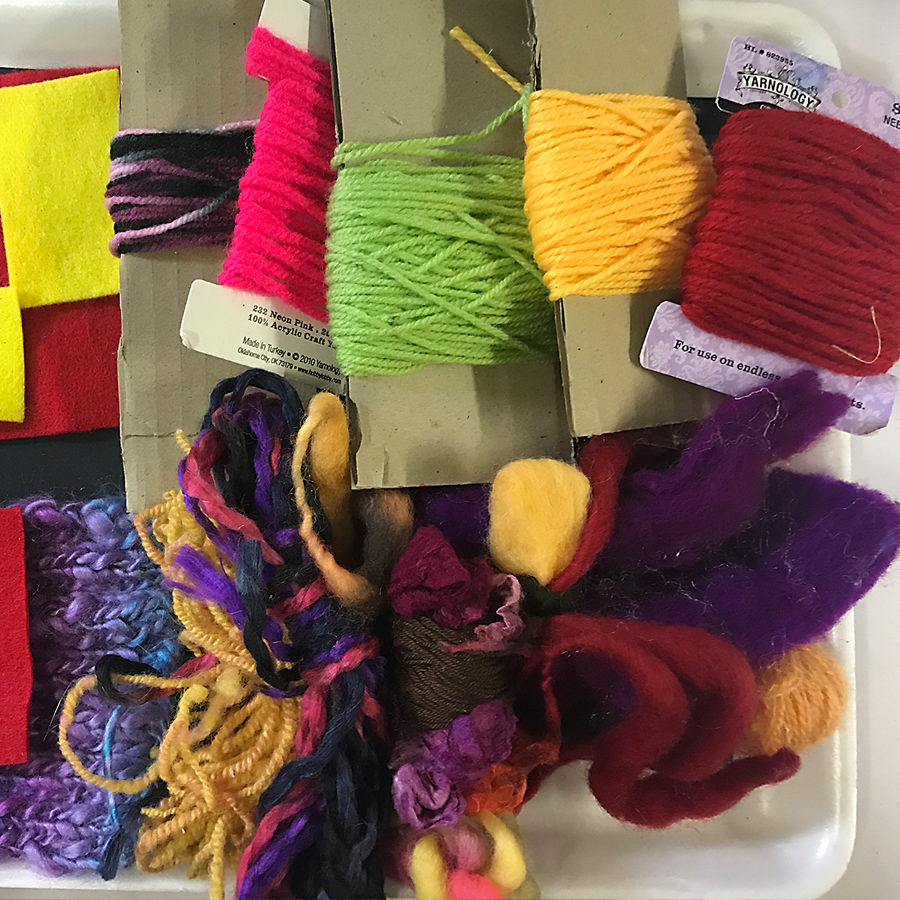
Yarns and cottons: We normally use colourful yarns brought from home or found at op shops/charity shops and crochet cottons for the Chenille needles. The best way to dispense yarns is a shoe box with holes on the lid to pass the yarn. We also dispense yarns and cottons using small quantities wrapped up on small pieces of cardboard.
The first picture on the right shows yarns and fabrics on a plastic tray. We do use trays a lot, it is easy to prepare the trays before the class starts. Provide one tray for a group of 5 students. The content of the trays could be needles, yarns, fabrics, scissors, buttons, feathers, lace and any other materials involved in the project. At the end of the class, students will return all the left over materials to the trays and leave them ready for the teacher to replenish for the following class.


To learn more about these procedures, view the videos below.
Hens video lesson
Other possibilities


